Anatomy of a Cue: A Buyer’s Guide
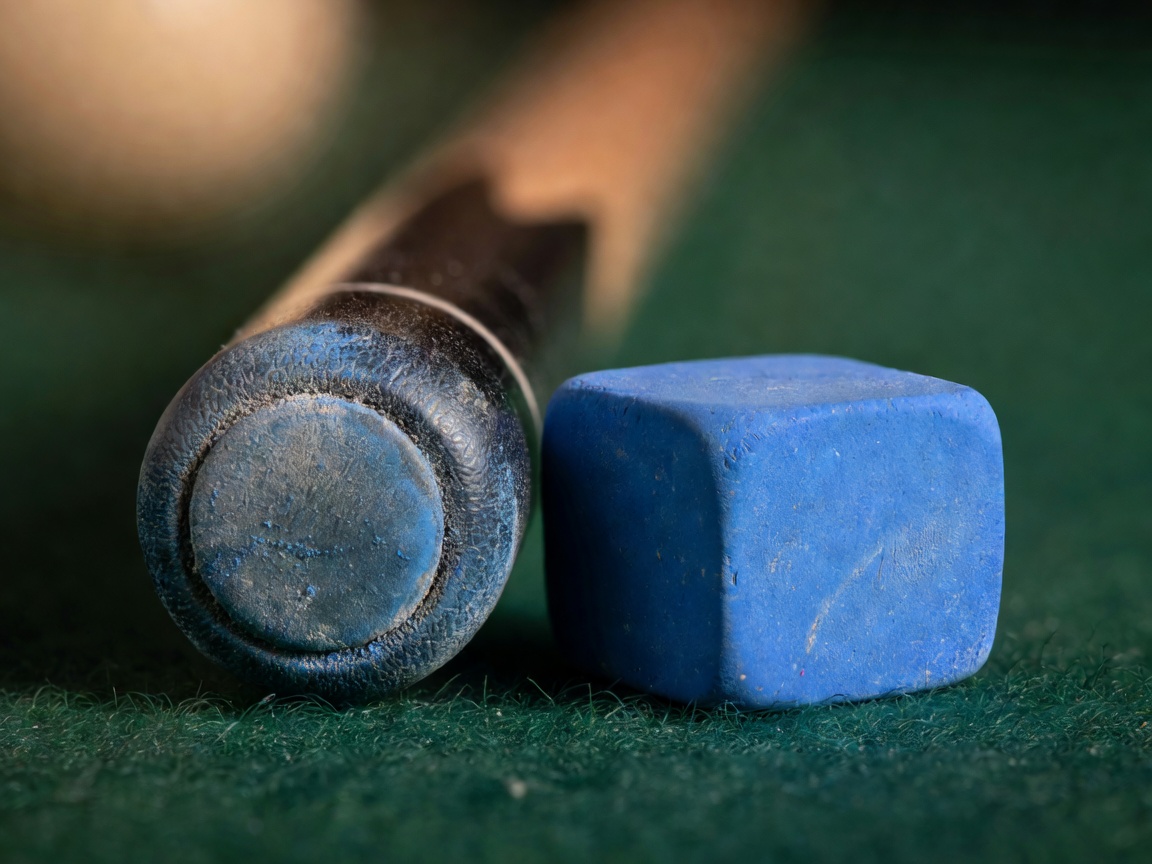
Selecting a billiard cue is arguably the most critical equipment decision a player will make. Unlike the standard "house cues" found in most commercial venues—which are often warped one-piece constructs with flattened tips—a personal two-piece cue offers consistency, tailored weight distribution, and predictable deflection. Understanding the physical anatomy of a cue is the first step toward making an informed purchase that aligns with your playing style.
Wood Selection and Deflection
The vast majority of high-quality cue shafts are milled from hard rock maple (particularly favored in North American 8-ball and 9-ball) or ash (traditionally used in snooker and English 8-ball). Hard rock maple offers a dense, rigid structure that produces a stiff hit, transferring maximum energy to the cue ball. Ash is characterized by its prominent grain structure, which many players use as a visual alignment aid when sighting down the cue.
In recent years, the market has expanded beyond traditional solid wood. Low-deflection shafts have fundamentally changed the game. Deflection, or "squirt," refers to the tendency of the cue ball to veer slightly off the aiming line when struck with side spin (English). Low-deflection shafts achieve a lighter front-end mass by hollowing out the first few inches of the shaft or incorporating carbon fiber composites. This reduced mass drastically minimizes squirt, allowing players to apply heavy spin without needing to over-compensate their aim.
Weight and Balance Points
Standard pool cues range from 18 to 21 ounces in half-ounce increments. A heavier cue (20-21 oz) requires less physical effort to generate momentum, making it easier to execute powerful break shots or long follow shots. The added mass helps keep the cue on a straight plane during the delivery.
Conversely, a lighter cue (18-19 oz) provides greater "feel" and feedback, which is advantageous for delicate positional play and touch shots. Just as important as the overall weight is the balance point. Most standard cues balance roughly 18 to 20 inches from the bumper (the bottom). A forward-balanced cue puts more weight in your bridge hand, promoting a pendulum-like swing, whereas a rear-balanced cue feels lighter in the front and requires a more controlled, deliberate stroke.
Tip Hardness and Material
The cue tip is the only part of the equipment that actually makes contact with the cue ball, making it paramount to performance. Modern tips are predominantly constructed from stacked layers of pigskin or cowhide leather. Layered tips maintain their shape longer than traditional single-piece leather tips and hold chalk more consistently.
- Soft Tips: Compress significantly upon impact, holding contact with the cue ball for a fraction of a millisecond longer. They easily grab chalk and allow for extreme spin, but require frequent shaping and maintenance as they flatten quickly.
- Medium Tips: The industry standard, offering a balanced compromise between cue ball grip and structural longevity. Most premium cues ship with a medium layered tip installed.
- Hard Tips: Provide minimal compression, resulting in less energy absorption and more power transfer. They are preferred for break cues or by players who desire a very crisp, stiff hit with minimal maintenance.
Joints and Wraps
The joint is the mechanical connection between the shaft and the butt. Materials vary widely, from stainless steel (which produces a firm, metallic "ping" on impact) to phenolic resin or wood-to-wood joints (which yield a softer, more natural vibration transfer). The pin size and thread count (e.g., 5/16x18, Radial, Uni-Loc) dictate how quickly the cue can be assembled and how securely the pieces mate.
Below the joint lies the wrap, which is where the gripping hand rests. Options include Irish linen (the classic choice, offering excellent moisture absorption), leather (smooth or textured, providing a premium feel), and wrapless (solid wood, preferred by players who want a sleek, seamless aesthetic). The choice of wrap is entirely subjective and depends on how much your hands sweat during prolonged play.
Ultimately, a cue should feel like an extension of your arm. By carefully considering shaft material, weight, tip hardness, and grip preference, you can select an instrument that provides the consistency required to elevate your game to the next level.