Preserving the Slate: Table Maintenance
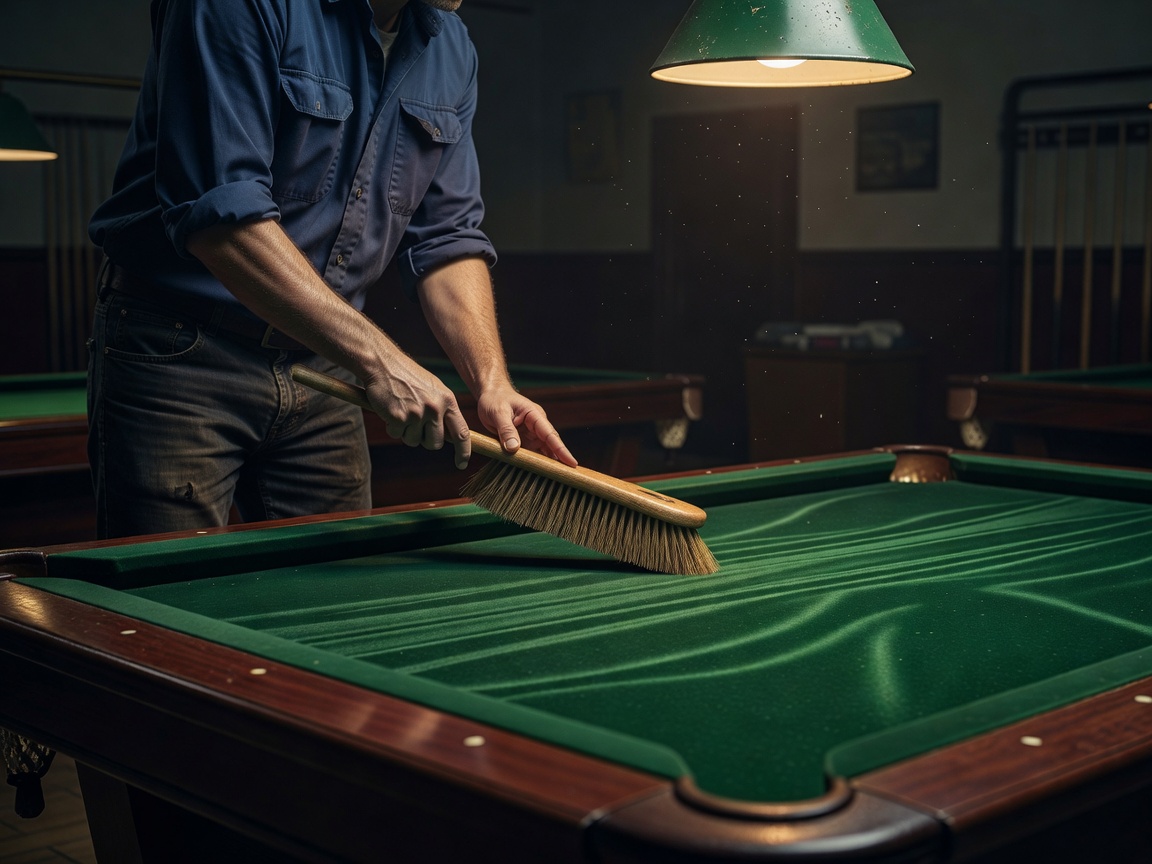
A high-quality pool table represents a significant investment. Whether it resides in a commercial hall or a private home, a table's playing characteristics are entirely dependent on how meticulously it is maintained. Neglect leads to slow play, erratic banking, and accelerated wear on the equipment. Implementing a strict maintenance protocol ensures the table plays true for decades.
Caring for the Cloth
The playing surface, commonly referred to as the felt, is actually a woven cloth. High-end tables utilize worsted wool, which is thread-woven tightly to eliminate nap (the fuzzy texture found on cheaper woolen blends). This allows the balls to roll faster and more predictably. However, worsted cloth acts like a magnet for chalk dust, skin oils, and ambient particulate matter.
Daily brushing is imperative. Crucially, one must never brush back and forth or in circles. Brushing must be executed in a single direction—traditionally from the head string (the breaking end) toward the foot string. This prevents the abrasive chalk dust from being ground deeper into the weave. Sweep the debris toward the pockets, where it can be gently vacuumed out using a crevice tool. Never use a vacuum with a rotating beater brush directly on the cloth, as it will stretch the fabric and create slack.
Environmental Controls
Wood, slate, and cloth are all highly reactive to their environment. Wood expands and contracts with moisture, while cloth can absorb ambient humidity, resulting in "heavy" conditions where balls roll slowly and spin wears off rapidly. Maintaining a room's relative humidity between 40% and 60% is vital. In damper climates, a dehumidifier in the billiard room will profoundly improve table speed and prevent the wooden cabinet from warping.
When the table is not in active use, it must be covered. A heavy-duty vinyl or leatherette cover prevents dust accumulation, shields the cloth from UV degradation (which bleaches the dye and weakens the fibers), and protects against accidental spills or pet damage.
Cushions and Leveling
The rubber rails (cushions) border the playing area and dictate the geometry of bank shots. Over a span of ten to fifteen years, natural gum rubber oxidizes and begins to harden, leading to a deadened response when a ball strikes the rail. Avoid exposing the table to direct, harsh sunlight or extreme temperature fluctuations to prolong the lifespan of the rubber.
Furthermore, a table must remain perfectly level. The slate bed is immensely heavy—often exceeding 600 pounds across three sections. Over time, slight settling of the floor underneath can cause the table to shift out of true. If you notice balls curving unexpectedly at low speeds, the table likely needs re-leveling. This process involves placing a machinist's level across multiple axes of the slate and adjusting the leveling shims located under the legs. Due to the precision required and the risk of disturbing the seams between the slates, leveling is generally best left to professional billiards mechanics.
Protecting the Wood and Leather
The exterior cabinetry and top rails require aesthetic upkeep. Wiping the wood down with a lightly damp microfiber cloth removes fingerprints and chalk residue. Avoid heavy aerosol furniture polishes that leave a slippery silicone residue, which can transfer to players' hands and subsequently to the cue ball.
For tables featuring traditional drop pockets, the leather nets can dry out and crack. Applying a small amount of clear leather conditioner every few months keeps the material supple and prevents the webbing from failing when a heavy object ball drops into it. By adhering to these practices, players ensure their table remains a perfectly flat, fast, and reliable arena for the game.