A Tale of Two Tables: Snooker vs Pool
While both derived from similar historic billiard games, snooker and pool have evolved into radically different disciplines. To the uninitiated, they both involve using a wooden stick to strike balls on a felt-covered table. However, any player crossing over between the two sports quickly realizes that the physics, geometry, and required skill sets are profoundly distinct.
The Arena: Table Dimensions and Pockets
The most immediate and imposing difference is the table size. A regulation American pool table measures 9 feet by 4.5 feet, though 7-foot tables are common in bars. A regulation snooker table is a massive 12 feet by 6 feet. The sheer distance between balls on a snooker table amplifies the margin of error; a one-millimeter deviation in aim can result in missing a pocket by several inches over a twelve-foot span.
The pockets themselves are differently designed. Pool pockets are cut at sharp angles and have larger openings (typically 4.5 to 5 inches), allowing balls traveling down the rails to easily drop in. Snooker pockets are much smaller (around 3.5 inches) and feature rounded knuckles. If a snooker ball hits the knuckle even slightly, the curved cushion will violently reject the ball back onto the table. This strictly dictates that balls must be driven into the center of the pocket.
The Equipment: Balls and Cues
The equipment scales with the table dynamics. Standard pool balls are 2.25 inches in diameter and weigh about 6 ounces. Snooker balls are noticeably smaller and lighter, measuring 2.0625 inches in diameter. Because the balls are lighter, they react differently to spin and require less force to move.
Correspondingly, the cues differ significantly. A typical pool cue has a thick shaft ending in a 12.5mm to 13mm tip to handle the heavy impact of larger balls. A snooker cue is much more slender, usually featuring a 9mm to 10mm tip, commonly made of ash rather than maple. The smaller tip allows for hyper-precise contact on the smaller cue ball, which is essential for the delicate positional play snooker demands.
Gameplay and Scoring
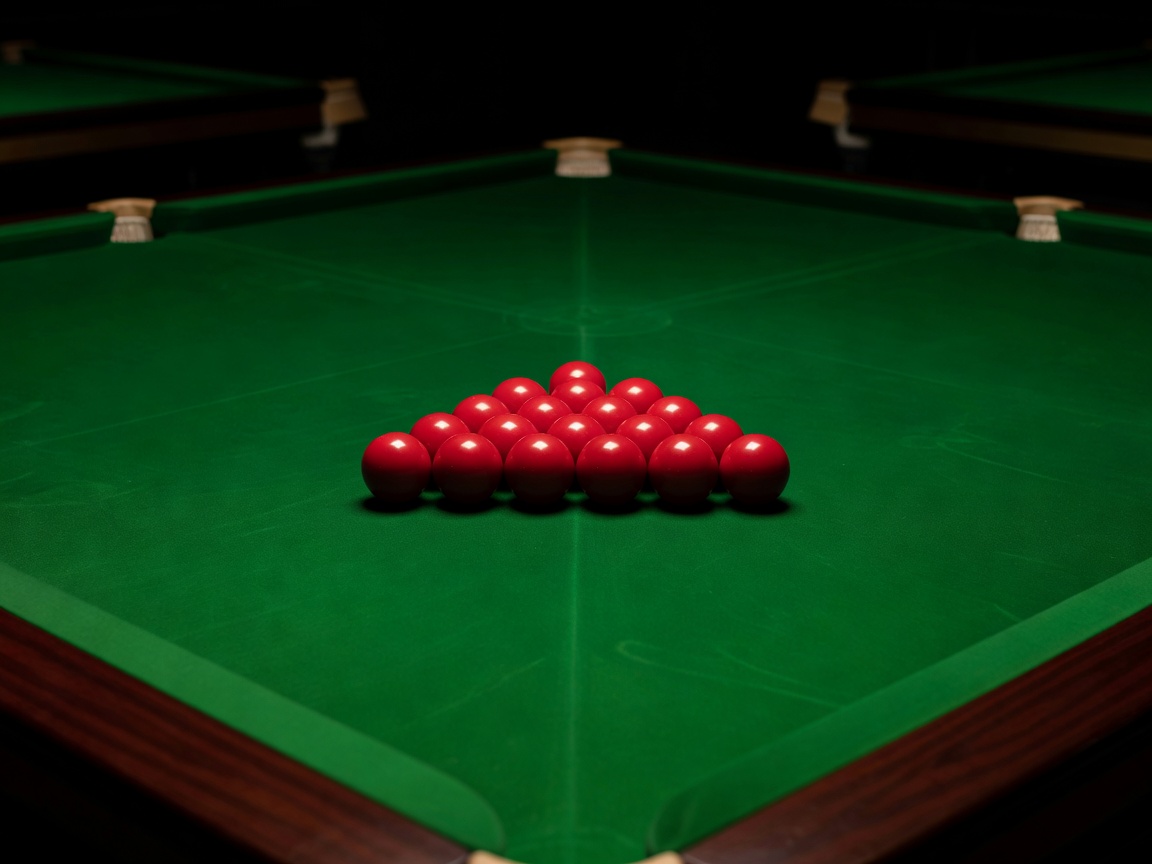
Pool games (like 8-ball or 9-ball) are typically won by clearing specific groups of balls or reaching a final objective ball. It is a game of sequences and clearing the table. Snooker is a points-based game. The table is populated with 15 red balls (worth 1 point each) and six colored balls (worth 2 to 7 points).
A player must alternate between potting a red and potting a color. Once potted, colors are re-spotted onto their designated marks until all the reds are gone, at which point the colors must be potted in ascending numerical order. This structural difference means snooker is heavily focused on stringing together high-scoring "breaks." Safety play in snooker is also far more punishing. Leaving an opponent "snookered" (hidden behind an obstructing ball) can result in foul points that directly contribute to the overall score.
In summary, while pool prioritizes aggressive shot-making, dynamic break clusters, and navigating tight traffic, snooker is an extreme test of precision, linear accuracy, and meticulous point accumulation over a vast playing surface.